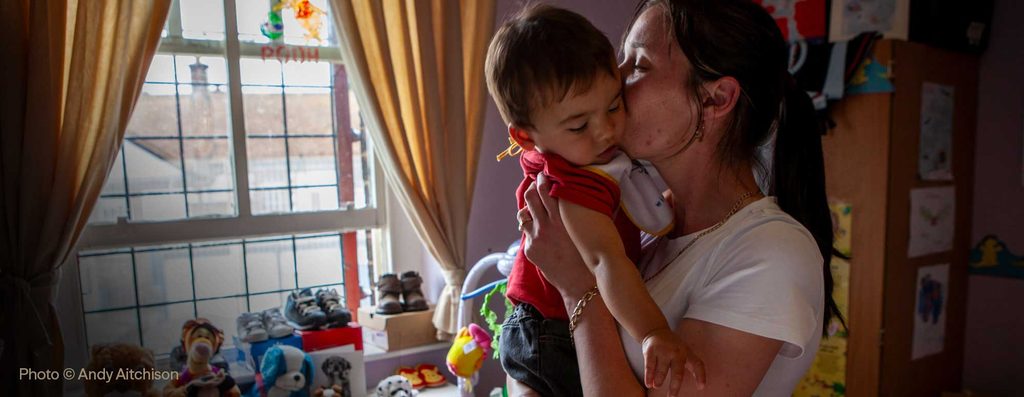
At any given point in 2025, over 900 women were in prison on remand – almost a 50% increase in the last decade.

The problem

The problem

Remanding women to prison before trial is meant to be a last resort but in recent years has become common practice. The current levels of remand are:  

Remand in prison is meant to be a last resort. Women don’t need to be in prison before trial.  

  • The MoJ estimate that 9 in 10 women on remand were low or medium risk.  
  • Women are most commonly remanded for theft offenses. 
  • Remand rates are higher for women than men, and numbers are growing at a faster rate.  
  • At a cost of over £86,000 per person, remand is expensive and puts more strain on an already overtaxed prison system.  

Remand is not justice; it is punishment before trial or sentencing.  

  • Women awaiting trial on remand are legally presumed innocent and yet can be held in prison for months or even years.  
  • After spending long periods in prison awaiting trial, many women will go on to be found innocent, receive a non-custodial sentence, or are immediately released having spent time served. 
  • Because women can lose their homes, jobs, and children while on remand, it can be more damaging than an actual prison sentence.

Putting women in prison before trial hurts women, families and communities.  

  • Women remanded to prison often have complex and unmet needs.  
  • Remand causes harm to women who are traumatised by uncertainty, a harsh prison environment, isolation from support networks and limited access to rehabilitative services.  
  • Children separated from their mothers have worse long-term outcomes.  
  • Women are the glue that holds together families and communities. Remand in prison destroys both.  
  • Women from Black, Mixed and Other ethnic groups are more likely to be remanded at both Magistrate’s Court and Crown Court.  
  • In 2022, Black defendants spent 70% longer on remand that White defendants, whilst mixed race and Asian defendants spent 54% and 48% longer respectively. 
  • A higher proportion of women on remand are foreign nationals (15%) when compared to the female sentenced population (8%). 
  • Foreign national women are at a particular disadvantage in the bail process because they might be presumed a flight risk, are less able to participate in the court proceedings, and more often lack secure housing.  

What’s going wrong

By law, a person should only be sent to prison before their trial or sentencing in exceptional circumstances. In reality, over a quarter of all women in prison are on remand. And the numbers are rising.  

This doesn’t make sense. Women are remanded at a higher rate than men, despite being accused of less serious offenses and generally being assessed as lower risk.  

The truth is — we don’t know why this is happening.  

We have some ideas. Judges make bail decisions quickly – sometimes in as little as two minutes. These decisions are often based on limited information, and there aren’t enough alternatives to remand for women with complex needs. There is also a backlog in the courts which keeps women in prison longer while they for their trial or sentencing.  

Still, because of limitations in the data collected by the government, we don’t actually know why women are being remanded more often, or how long they are being held on remand. We’re working hard to figure this out.  

The problem is that being held in prison on remand has long-term, serious consequences for women, families and communities. 

Why does it matter?

Being held in prison on remand has long-term, serious consequences for women, families and communities.  

Women remanded to prison often have complex needs, and prison is a harsh environment. Women on remand face complete uncertainty about their futures – they don’t know when they might next reconnect with their children, return to work, or be able to keep their housing.  

Because most in-prison support services depend on your sentence, women on remand have less access to rehabilitative support.  

In these difficult circumstances, women suffer. Remand puts strain on an already overstretched, overcrowded prison system; in some women’s prisons like Bronzefield, more than half of the population are on remand.  

Self-harm rates are extremely high for women on remand.  

Children lose contact with their mothers.  

Communities suffer as the women who hold it all together are taken away for a completely uncertain length of time.   

Women from minority ethnic communities and foreign national women are remanded at higher rates.  

What needs to change?

Time for change

We want to see:

  • Significantly fewer women held in prison on remand.  
  • Women on bail in their communities while awaiting trial or sentencing.  
  • Long-term, holistic support for women both in the community and in prison.  
  • Support for women throughout the court process.  
  • More unrestricted funding for women’s support services.  
  • More alternatives to remand in prison – including both residential and non-residential options.  
  • Alternatives to remand designed by and for women with lived experience of the criminal justice system.  

This is the moment for change

The government has repeatedly indicated an interested in decreasing female remand rates in their 2018 Female Offender Strategy and most recently in the recommendations published by the newly established Women’s Justice Board.  

What are we doing? 

We are a diverse collective of women with lived experience and voluntary sector organisations pushing for change by: 

In partnership with